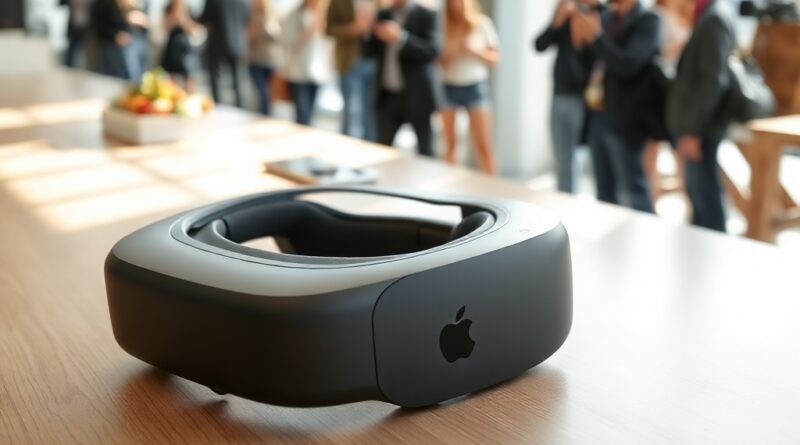
Apple Vision Pro 2 rumor points to lighter 320g chassis, dual 2.6K micro‑OLEDs and $2,999 US price for early 2027
Apple is rumored to be developing a second-generation Vision Pro headset expected to launch in early 2027, featuring a lighter 320-gram chassis, dual 2.6K micro-OLED displays, and a $2,999 price, according to analyst reports. The rumored changes aim to address weight and comfort concerns raised by users of the current 1.4-pound model, though Apple has not officially confirmed any details.
Analyst reports and media speculation suggest Apple is aiming to address these issues in a second-generation model by employing lighter materials such as magnesium, titanium, or custom alloys, though no verified figure of 320 grams has been confirmed by major sources. The existing Vision Pro’s front structure is milled from a single piece of aluminum, contributing to its weight, according to teardown analyses.
The current Apple Vision Pro headset weighs approximately 1.4 pounds (about 630 grams), with users frequently citing weight and comfort as key concerns.
Display improvements are also rumored, with some reports indicating Apple may use dual 2.6K micro-OLED panels in the next model. However, current third-party data shows the first-generation Vision Pro features displays with a resolution of 3,660 by 3,200 pixels per eye, which is significantly higher than a 2.6K classification. No credible leaks have confirmed a reduction in display resolution for the successor device.
Pricing speculation centers around a target near $3,000, a decrease from the current $3,499 starting price in the U.S. Apple has not officially announced any pricing for a second-generation Vision Pro, and the $2,999 figure appears in some analyst discussions as an approximate target rather than a confirmed price point. Reports also differentiate between a premium Vision Pro successor and a separate, more affordable AR/VR headset Apple is reportedly developing for release around 2027 or later.
Performance upgrades are anticipated, with analyst Ming-Chi Kuo suggesting the next Vision Pro could incorporate an Apple M5 chip, while Bloomberg’s Mark Gurman has indicated a possible M4 chip. Both chip options would represent a step up from the current M2 processor and R1 coprocessor, potentially offering improved power efficiency, enhanced battery life, stronger external display support, and advanced on-device AI capabilities. These details remain unconfirmed by Apple.
Ergonomic improvements are reportedly a focus for the next Vision Pro iteration. Sources cited by Gurman describe a redesigned headstrap intended to distribute weight more evenly and reduce pressure on the front of the face and top of the head, aiming to alleviate neck strain experienced by some users during extended wear. The rumored use of lighter chassis materials is also linked to these comfort enhancements.
Release timing for the second-generation Vision Pro is uncertain. Some analyst reports, including those summarized by Mashable, suggest a launch window in spring 2026, while others discuss possible late 2025 or early 2026 timeframes. The “early 2027” date more commonly refers to the anticipated debut of a lower-cost, lighter AR/VR headset rather than the premium Vision Pro successor. Current reporting indicates Apple’s development roadmap includes both a high-end Vision Pro follow-up and a more affordable device arriving separately.
Additional rumored features include potential 5G connectivity and a Thunderbolt 5 or high-bandwidth wired port for ultra-low-latency tethering to Macs, which could support demanding applications such as flight simulators or medical imaging. Expanded external display capabilities and enhanced “Apple Intelligence” AI features are also anticipated, leveraging the improved system-on-chip and neural engine.
Apple has not officially confirmed any details about a second-generation Vision Pro or related products. The only confirmed Vision Pro hardware remains the first-generation model launched in 2024, with official technical specifications covering its micro-OLED displays, M2 and R1 chips, 23 million total pixels, and supported refresh rates between 90 and 120 Hz. The current high price and bulky form factor have limited adoption, motivating Apple’s reported focus on lighter, more comfortable, and more affordable spatial computing devices in the coming years.
