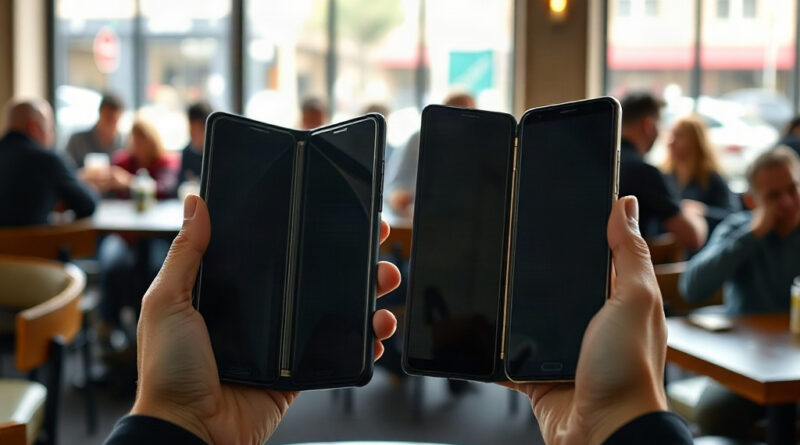
Samsung Galaxy Z Fold8 vs Z Fold7 comparison asks if upgrade is worth it
Samsung officially unveiled the Galaxy Z Fold8 in July 2026, succeeding the Galaxy Z Fold7 released in September 2025, with both models available in markets including the U.S., Africa, and Singapore. According to Samsung and industry sources, the Z Fold8 offers an iterative upgrade focused on refinements in size, weight, display, battery, and AI features rather than a full redesign.
The Galaxy Z Fold8, launched in July 2026, represents an incremental upgrade over the Z Fold7, which debuted in September 2025, according to Samsung’s official specifications and industry reviews. The newer model focuses on refinements in size, weight, display quality, battery technology, and artificial intelligence features rather than a comprehensive redesign, sources confirmed.
The Z Fold8 measures 123.9 by 81.9 by 9.7 millimeters when folded and weighs 201 grams, which is 14 grams lighter and shorter than the Z Fold7’s approximate folded dimensions of 158.4 by 72.8 by 8.9 millimeters and weight of about 215 grams, according to Notebookcheck and other sources.
Samsung’s official spec pages dated July 21, 2026, list the Z Fold8’s main inner display as a 7.6-inch Foldable Dynamic LTPO AMOLED 2X panel with a QXGA+ resolution of 1848 by 2448 pixels and a 120 Hz refresh rate. This contrasts with the Z Fold7’s larger 8.0-inch main screen with a resolution of 2184 by 1968 pixels, according to Samsung’s September 2025 listings. While the Z Fold7 offers a slightly larger display area, Samsung and third-party reviews note that the Z Fold8 delivers higher peak brightness—around 3,000 nits—improved outdoor visibility, and greater energy efficiency due to LTPO technology.
This reduction in size and weight reportedly enhances one-handed usability and pocketability. The design retains the book-style fold but incorporates refinements in the hinge and chassis, as noted by a German comparison article and multiple reviews.
In terms of durability, the Z Fold8 uses Samsung Ultra Thin Glass on its main screen and Gorilla Glass Ceramic 3 on the cover display, with an IP48 water-resistance rating that protects against submersion up to 1.5 meters for 30 minutes. This marks a modest improvement over the Z Fold7’s earlier protection standards, according to carrier and review information.
Under the hood, the Z Fold8 is powered by the Qualcomm Snapdragon 8 Elite Gen 5 for Galaxy chipset, an advancement over the Z Fold7’s Snapdragon 8 Elite for Galaxy, as confirmed by multiple technical reviews. This newer processor provides improved CPU and GPU cores, enhanced AI capabilities, and greater power efficiency. Both models offer RAM configurations of 12 GB and 16 GB and storage options of 256 GB, 512 GB, and 1 TB, consistent with Samsung’s official product pages.
Battery technology also sees an upgrade with the Z Fold8’s introduction of a 4,800 mAh silicon-carbon dual battery, which is said to improve energy density and thermal performance compared to the conventional lithium-based battery in the Z Fold7. The Z Fold8 Ultra variant increases capacity to 5,000 mAh. Reviewers have noted measurable gains in battery endurance, particularly when using the 120 Hz refresh rate and multitasking features.
Connectivity features on the Z Fold8 include Wi-Fi 7, Bluetooth 6.0, ultra-wideband (UWB), dual SIM (nanoSIM plus eSIM), NFC, and GNSS. In contrast, the Z Fold7 supports Wi-Fi 6/6E and Bluetooth 5.x, making the newer model more future-proof for wireless standards, according to carrier listings and technical analyses.
Camera systems differ between the two models. The Z Fold8 employs a dual 50-megapixel rear camera setup with wide and ultra-wide lenses, along with dual 10-megapixel front-facing cameras—one on the cover and one inside—according to detailed reviews. The Z Fold7 features a triple camera array with a 50-megapixel main sensor plus ultra-wide and telephoto lenses but lacks the dual 50-megapixel configuration and some under-display refinements found in the Z Fold8.
On the software front, the Z Fold8 ships with Samsung’s One UI 9 based on Android 17, incorporating enhanced foldable user experience and new AI features such as generative editing, summarization, and smart multitasking tools. The Z Fold7 launched with Android 16 and One UI 8.x, receiving updates since but without some of the latest AI workflows and UI optimizations highlighted in reviews.
Practical usage comparisons emphasize the Z Fold8’s lighter weight and shorter folded height, which contribute to greater comfort during extended use and better pocket fit, according to several comparative tests. The smaller 7.6-inch inner screen and 5.5-inch cover display offer a more balanced form factor that remains productive when unfolded. Reviewers credit the combination of silicon-carbon battery and LTPO display with improved battery life over the Z Fold7’s older components.
Industry analyses and media reviews generally characterize the Z Fold8 as a refined iteration of Samsung’s flagship foldable phone. The device’s performance improvements, better outdoor screen visibility, enhanced durability, and AI-driven software features are seen as meaningful upgrades. However, sources note that the decision to upgrade depends on user priorities, with the Z Fold8’s advances most compelling for heavy multitaskers, early adopters of AI features, and those valuing improved ergonomics and battery life.
Samsung’s positioning of both models as premium foldable devices is reflected in carrier listings from AT&T and Verizon, which place the Z Fold8 in the top-tier price segment as a successor to the Z Fold7. Official materials and third-party reviews indicate that the price increase is evolutionary rather than radical.
The Galaxy Z Fold8 and Z Fold7 continue Samsung’s focus on foldable smartphone innovation, with the newer model offering refinements that enhance user experience without departing from the established design and feature set. The rollout in markets including the United States, Africa, and Singapore reflects Samsung’s global strategy for its flagship foldable lineup.
