Ring announces Ring Robotics ushering in new era of home security
Ring announced Tuesday it is launching a new product category, Ring Robotics, with two devices: the Drone Cam and Rover Cam. CEO Jamie Siminoff said the devices were designed to provide security in areas fixed cameras cannot reach.
The device remains subject to Federal Communications Commission approval. The Ring Rover Cam, a wheeled robot for businesses, is priced at $999.99 with pre-orders opening Nov. 10 and shipping scheduled to begin Dec. 16, 2026, officials said.
Ring Drone Cam will cost $249.99 and is scheduled to begin shipping Jan. 27, 2027, according to the company.
The Drone Cam weighs 5.8 ounces and features two 2K-resolution cameras, one on the front and one on the bottom, with LED lights for low-light operation, according to company specifications. It uses Ring’s custom-built AI Pilot system, which relies on cameras, vision models, on-device sensors and cloud processing to map indoor spaces, suggest patrol points and navigate autonomously, Ring said. The drone can fly up to eight minutes on a full charge and requires approximately one hour to recharge, with the ability to monitor homes up to 3,500 square feet, according to the company.
Users can schedule flights along predetermined routes or send the device on specific missions, such as checking on a pet or an appliance, Ring said. The drone syncs with other Ring cameras and sensors and can respond automatically when windows or doors open, according to the company. The device records 2K video, can rotate 360 degrees, and produces a loud buzzing sound that Ring officials said is intentional to deter intruders and alert residents.
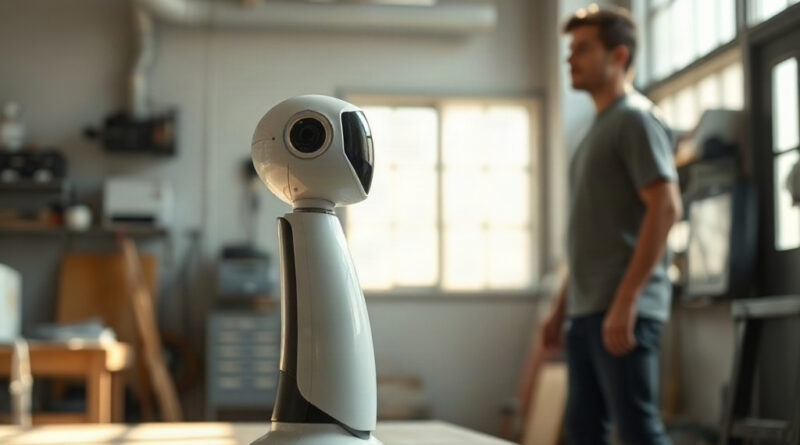
The Rover Cam is designed for business patrols, performing scheduled routes or investigating specific rooms on demand, according to Ring. It features a periscope camera that can see over counters and shelves, records up to 4K video, and includes a siren and flashing lights to deter intruders, the company said. The Rover Cam can automatically respond when another Ring device detects suspicious activity, according to officials. The device is a security-focused successor to Amazon’s Astro robot, which was introduced in 2021 but failed to gain market traction, according to reports.
Both devices include privacy measures, Ring said. The Drone Cam powers down when docked with its camera off until a flight begins, and the Rover Cam has a sleep mode that retracts its camera and turns off its microphone, according to the company. Both devices have LED indicators that illuminate when recording, officials said.
Video from both devices is protected under Ring’s Throw Away the Key Encryption system, known as TAKE, according to the company. Under this system, videos are protected with unique encryption keys that rotate regularly, and Ring deletes its copy of the keys after 24 hours, after which keys are stored on customer devices, officials said. Ring said it can only provide non-video information, such as basic subscriber information, in response to valid law enforcement requests including warrants, subpoenas and court orders.
The Drone Cam has been in development for more than five years and went through multiple redesigns as engineers worked to fit cameras, sensors, batteries and propellers into a flying device, according to CNET. Ring first announced an indoor security drone in 2020 as the Ring Always Home Cam, but that device had a limited, invitation-only release and was never available for public sale, reports show.
Ring CEO Jamie Siminoff demonstrated the drone during Tuesday’s announcement in an event space replicating a home, where it flew for about one minute covering two medium-sized rooms, according to CNET.
The launch comes after Ring in 2026 canceled a planned partnership with surveillance company Flock Safety following public backlash, including criticism from Sen. Ed Markey, D-Mass., over concerns about surveillance of humans, according to reports.
