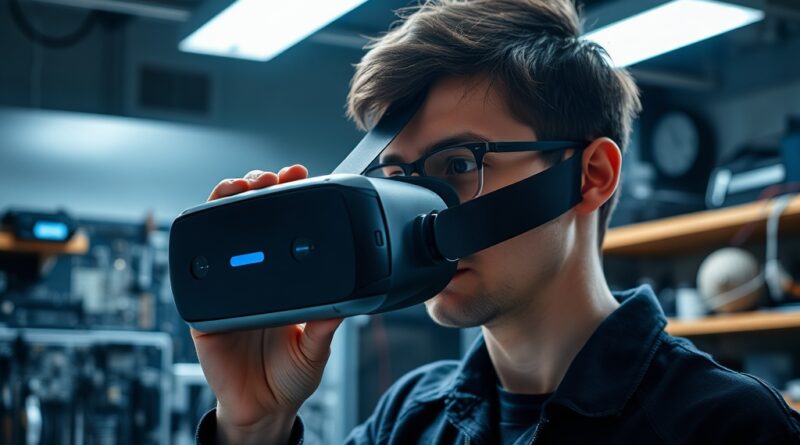
Quest 4 Prototype Leak Hints at Lighter Headset and Improved Passthrough Cameras for 2027
Meta revealed research prototypes of next-generation VR and mixed-reality headsets at SIGGRAPH 2025, showcasing lighter designs and enhanced passthrough cameras. According to company officials and multiple reports, the experimental devices feature a smaller, glasses-like form factor and 80-megapixel cameras aimed at improving mixed-reality visuals, though they are not yet production-ready consumer products.
According to multiple reports and company statements, Meta’s next-generation headset prototypes include a virtual reality-only device with an ultra-wide field of view, a mixed-reality headset featuring high-fidelity color passthrough, and a “Visual Turing” display prototype. Meta officials have emphasized that these devices are research prototypes, not consumer products, and are not production-ready. The company plans to showcase the prototypes at SIGGRAPH 2025, a leading conference on computer graphics and interactive techniques.
Leak reports highlight the use of 80-megapixel cameras capable of capturing passthrough video at 60 frames per second.
Reports from Business Insider and Heise indicate that Meta is testing a smaller, lighter headset design codenamed “Phoenix,” which resembles a pair of glasses. Sources familiar with the device told Business Insider that the prototype offloads processing and battery components to an external pocket computer, contributing to a reduced size and weight compared with the current Quest 3. YouTube leak coverage has repeatedly described the chassis as significantly smaller and lighter, although Meta has not confirmed any specific weight or final design details.
A key focus of the prototypes is improved mixed-reality passthrough capabilities. One source described the mixed-reality headset as targeting high-fidelity color passthrough, with enhanced depth sensing to enable more realistic blending of virtual and real-world imagery. These camera specifications have not been independently verified by Meta and remain at the prototype research stage.
Regarding the timeline for a potential consumer release, an internal memo cited by Business Insider and Heise reportedly pushes the device’s launch window to the first half of 2027. This represents a shift from earlier expectations of a 2026 release. Other leaks suggest some variants could appear as early as late 2026, but no official launch date has been announced by Meta. Some reports speculate on the possibility of a high-end product preceding a broader consumer rollout, though these remain unconfirmed.
Technical details circulating in leaks mention a next-generation Qualcomm Snapdragon XR chip powering the prototypes. Claims vary between the Snapdragon XR2 Gen 3 and other next-generation XR platforms. Some videos allege substantial GPU performance improvements, but these assertions have not been independently verified. Additional prototype features reportedly include eye tracking and face tracking, which sources say could support enhanced avatar interactions, foveated rendering, and social virtual reality applications.
Display and optics technology are also under development, with leaks suggesting the use of OLED or micro-OLED panels in premium variants. Some reports mention a resolution approaching 4K per eye and an ultra-wide 180-degree field of view on certain prototypes. Pancake lens designs, which allow for a thinner optical path, have been cited as a means to reduce headset bulk and weight. However, these details are based on leaked prototype demonstrations and speculative commentary rather than official specifications.
Meta has publicly acknowledged the existence of research prototypes through its Reality Labs division and confirmed plans to demonstrate these devices at SIGGRAPH 2025. The company has clarified that these prototypes are experimental and not representative of a final consumer product. Previous leaks of Meta headset prototypes include the Quest Pro engineering sample, which surfaced in 2022 after being found in a hotel room. Final branding, consumer specifications, exact weights, camera counts, and retail launch dates for the next-generation headset remain unconfirmed.
