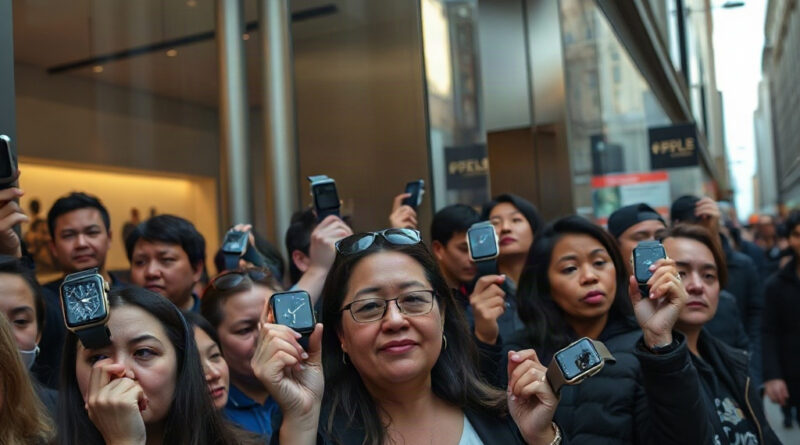
Apple Watch bricking lawsuit filed over older Apple Watch models in class action
A class action lawsuit was filed Monday in the U.S. District Court for the Northern District of California against Apple Inc. by plaintiff Goetz on behalf of California consumers. The suit alleges that Apple’s watchOS 27 update prematurely ended software support for older Apple Watch models, including Series 6 through 8 and the original Apple Watch Ultra, effectively rendering the devices unusable, according to court documents.
The lawsuit, filed under the case name *Goetz v. Apple Inc.*, Case No. 3:26-cv-08384, seeks class certification for California consumers who purchased specific older Apple Watch models. According to court documents, the complaint alleges that Apple’s watchOS 27 update is incompatible with Apple Watch Series 6, Series 7, Series 8, Apple Watch SE (2nd generation), and the original Apple Watch Ultra. This incompatibility, the suit contends, effectively ends software support and updates for these devices, rendering them unusable despite their hardware remaining functional.
The complaint alleges that Apple’s watchOS 27 update is incompatible with Apple Watch Series 6, Series 7, Series 8, Apple Watch SE (2nd generation), and the original Apple Watch Ultra.
Plaintiff Goetz argues that Apple’s decision to cease software support constitutes a form of “bricking” by functional disablement rather than physical damage. The complaint asserts that Apple’s actions amount to planned obsolescence, prematurely shortening the useful life of the affected watches. By controlling watchOS compatibility exclusively, Apple allegedly forced consumers to upgrade to newer models to maintain full functionality. The suit claims this conduct violates California consumer protection laws by deceptively inducing purchases without adequate disclosure of the limited software support lifespan.
The complaint further alleges that Apple engaged in unfair business practices by cutting off updates and forcing customers into replacement purchases. It seeks monetary damages for the diminished value and lost use of the watches, restitution, and injunctive relief to prevent Apple from continuing the alleged practice of bricking older models through software policy decisions. The proposed class includes purchasers of the specified watch models within California.
This lawsuit follows a history of legal actions involving Apple Watch devices but focuses on software support rather than hardware defects. Previously, Apple agreed to a $20 million settlement over battery swelling and screen issues affecting early Apple Watch models, including the First Generation, Series 1, Series 2, and Series 3. That settlement, which covers qualifying battery-related screen damage reported between April 24, 2015, and February 6, 2024, provides payments up to $50 per affected watch. Apple denied wrongdoing in that case but established a non-reversionary fund to compensate class members, according to court records.
Earlier litigation centered on physical defects such as battery swelling causing screens to crack, detach, or shatter. These cases involved allegations of design defects across multiple Apple Watch generations, including First Generation through Series 6 and SE models. Plaintiffs claimed inadequate internal space for lithium-ion batteries led to swelling and resulting screen damage, sometimes exposing sharp edges. Those suits sought to represent purchasers who experienced such physical damage.
In contrast, the current lawsuit uses the term “bricking” to describe the loss of functionality stemming from Apple’s software update and support decisions rather than physical harm. Records show that Apple previously faced similar issues in December 2016 when it temporarily pulled the watchOS 3.1.1 update after reports that it bricked some Series 2 watches by preventing them from booting.
The new suit highlights broader concerns about Apple’s control over its ecosystem and how software compatibility decisions can affect the longevity and value of older devices. Litigation history indicates that Apple has at times responded to class actions with screen replacement programs for certain models, though many devices fell outside those programs.
The case is filed in the U.S. District Court for the Northern District of California, a common venue for technology-related class actions. Plaintiffs are seeking to hold Apple accountable for what they describe as premature termination of software support, which they say has economic consequences for consumers who purchased watches under the assumption of longer product lifespans. The court will determine whether the case proceeds as a class action and consider the merits of the claims regarding Apple’s software support policies.
